
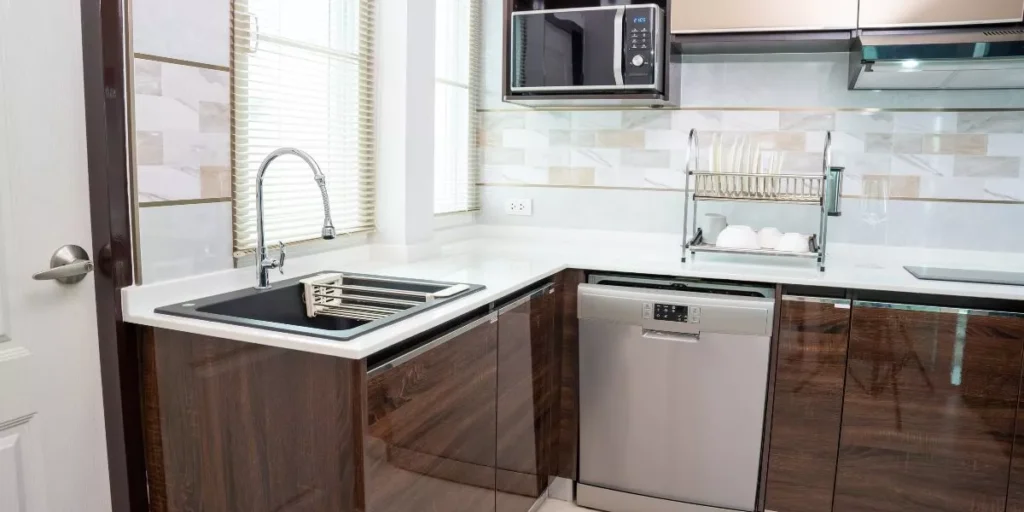
If you’re torn between countertop dishwashers and full-size models, there are key factors to weigh. Consider the space available in your kitchen and the volume of dishes you typically clean. Each type has its advantages, but which one suits your needs best? Size matters, but so do features and cost. Before making your decision, let’s break down these aspects further to help you make an informed choice.
Size Comparison
When comparing countertop dishwashers to full-size models, you’ll notice a significant difference in size. Countertop dishwashers are designed to fit on your kitchen counter or in a cabinet, making them ideal for small kitchens or apartments where space is limited. These compact units typically measure around 17 inches tall, 22 inches wide, and 19 inches deep, offering a smaller footprint compared to full-size dishwashers.
On the other hand, full-size dishwashers are larger and are usually around 35 inches tall, 24 inches wide, and 24 inches deep. This difference in size means that full-size models can hold more dishes and utensils per load, making them more suitable for larger households or families that produce a higher volume of dirty dishes.
Consider your kitchen space and the number of dishes you need to wash regularly when deciding between a countertop dishwasher and a full-size model.
Capacity Evaluation
In terms of capacity evaluation, the difference in size between countertop dishwashers and full-size models directly impacts how many dishes and utensils each can accommodate per cycle. Countertop dishwashers are designed to fit on your countertop or in a compact space, typically holding around 4-6 place settings per wash. This makes them ideal for smaller households, apartments, or as a secondary dishwasher.
On the other hand, full-size dishwashers are larger and can hold anywhere from 12-16 place settings per cycle, catering to the needs of larger families or households with heavier dishwashing needs.
When evaluating capacity, consider the frequency of dishwashing and the number of people in your household. If you have a smaller kitchen or live alone or with a partner, a countertop dishwasher may suffice. However, for larger families or those who entertain frequently, a full-size model might be more practical. Understanding your capacity needs is crucial in choosing the right dishwasher for your lifestyle.
Feature Analysis
Compare the key features of countertop dishwashers and full-size models to determine the best fit for your needs. Countertop dishwashers are compact and perfect for small kitchens or households with minimal dishwashing needs. They typically hold around 4-6 place settings and are ideal for singles, couples, or small families. On the other hand, full-size dishwashers offer larger capacities, ranging from 12-16 place settings, making them suitable for larger families or households that go through more dishes.
In terms of features, both countertop and full-size dishwashers offer similar functionalities such as various wash cycles, adjustable racks, and energy-saving options. However, full-size models may come with additional features like third racks for cutlery, specialized wash zones, and advanced drying options. If you value convenience and time-saving features, full-size dishwashers might be the better choice for you. On the other hand, if space and portability are your main concerns, a countertop dishwasher could be the perfect solution.
Cost Consideration
Considering your budget is crucial when deciding between countertop dishwashers and full-size models. Countertop dishwashers are generally more affordable upfront, with prices ranging from $200 to $500. On the other hand, full-size models can cost anywhere from $400 to $1,500 or more, depending on the brand, features, and capacity.
While the initial cost of a countertop dishwasher may seem appealing, you should also factor in long-term expenses. Countertop models typically use less water and energy per cycle compared to full-size dishwashers, potentially leading to lower utility bills over time. Additionally, full-size dishwashers can accommodate larger loads, reducing the number of cycles needed to clean your dishes.
When considering cost, think about your specific needs and usage patterns. If you have a small household and limited space, a countertop dishwasher might be a cost-effective choice. However, if you frequently host gatherings or have a large family, investing in a full-size model could offer better long-term value despite the higher upfront cost.
Trending Products